Total cost starts with a comparable operating scenario
Enterprise software total cost of ownership is credible only when every option is priced against the same users, locations, transactions, modules, environments, integrations, support, data horizon and contract period. Comparing a subscription quote with a fully implemented service makes the cheaper column meaningless.
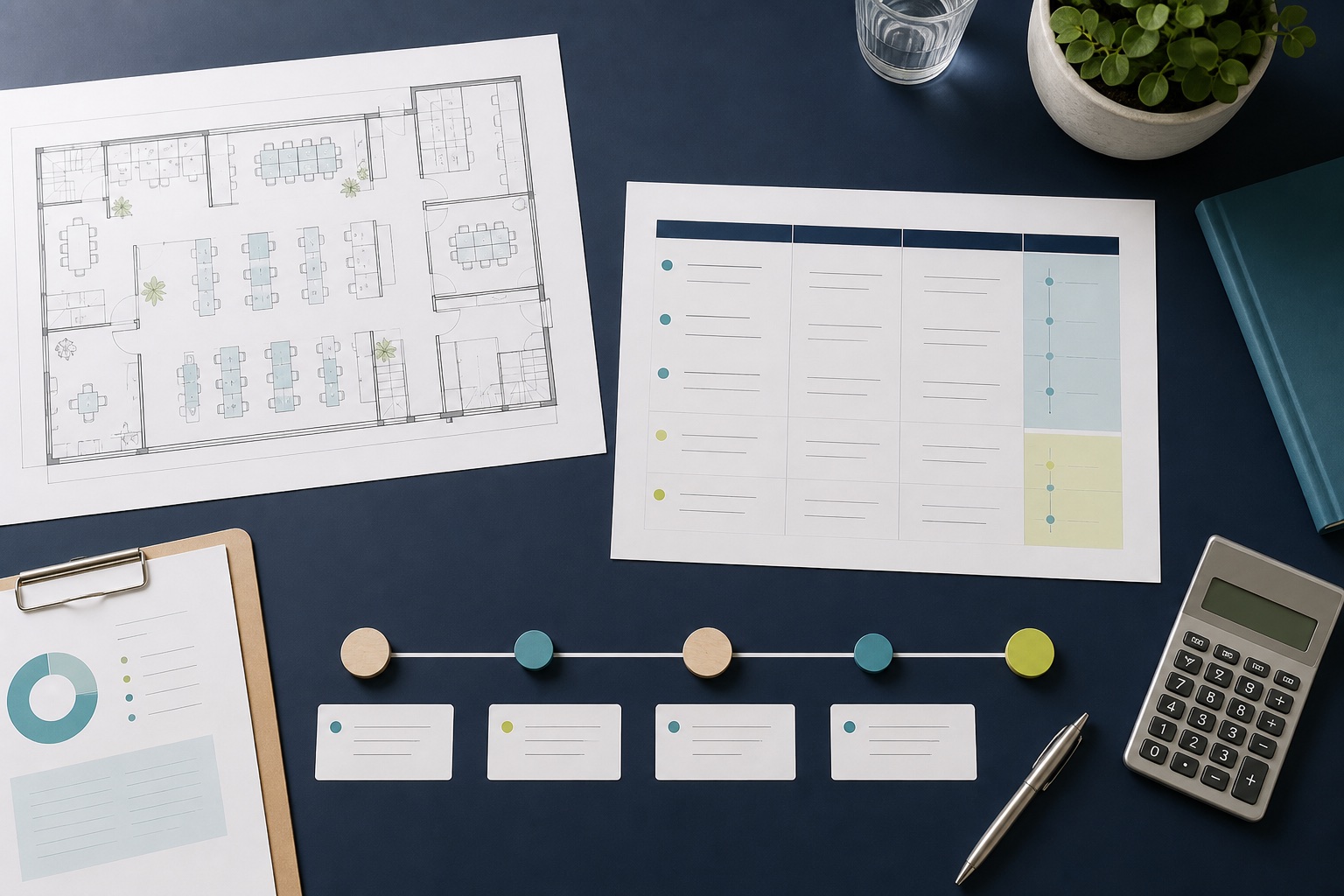
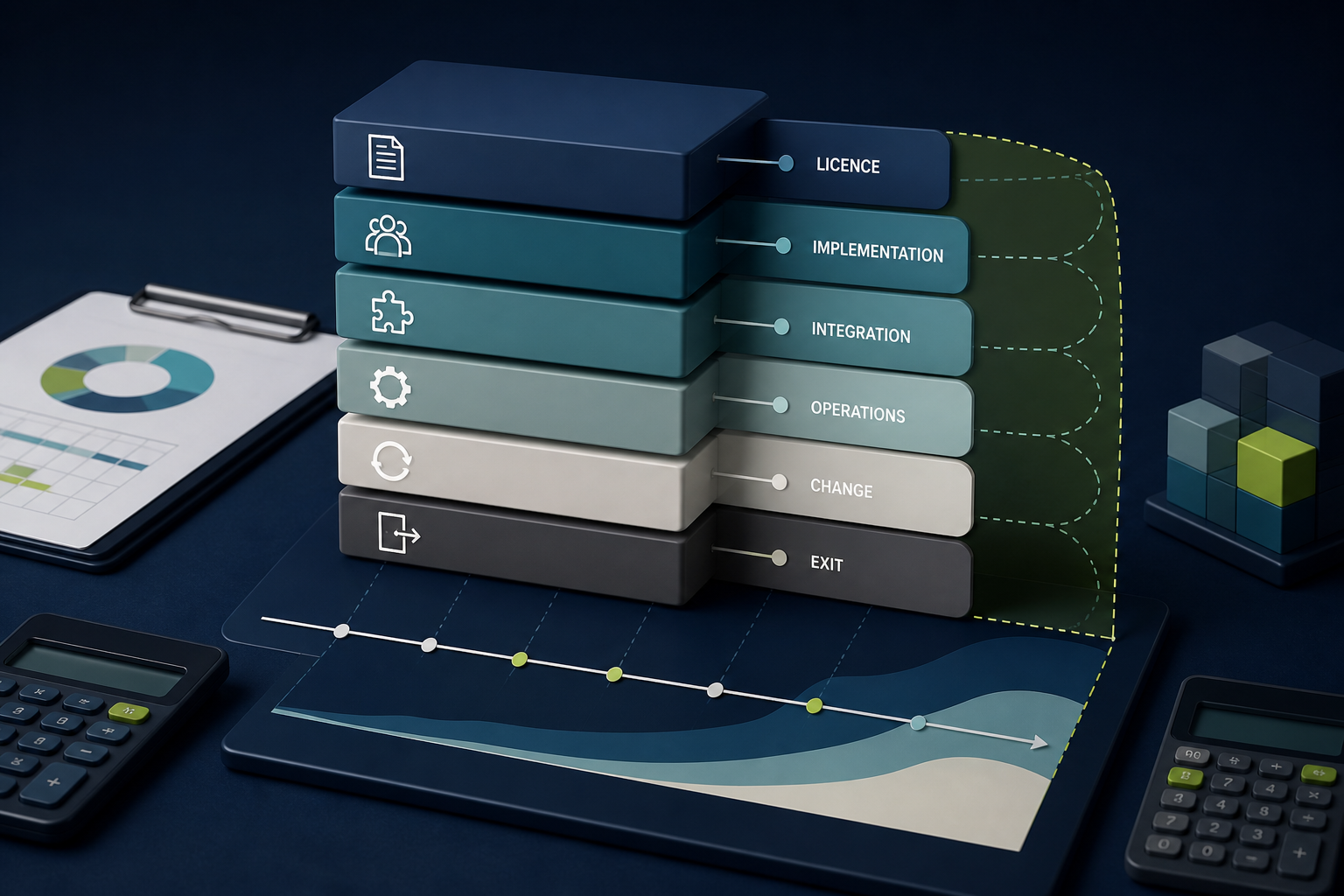
Write the technical and operating baseline before collecting numbers. State scope, schedule, responsibilities, assumptions, exclusions and uncertainty. Then separate one-off, recurring, usage-linked, change and exit costs. A single total can follow, but reviewers must be able to inspect its components and confidence.
The purpose is not to predict every invoice. It is to reveal the cost drivers, ranges and decisions that distinguish options. A model that updates as evidence improves is more useful than a precise-looking figure built from hidden assumptions.
| Layer | Typical items | Common omission |
|---|---|---|
| Acquire | Subscription, modules, environments and minimums | Required add-ons |
| Implement | Discovery, configuration, migration and testing | Internal decision time |
| Connect | Identity, interfaces, data and monitoring | Ongoing connector change |
| Operate | Administration, support, assurance and reporting | Manual repair work |
| Change and exit | Upgrades, growth, export and transition | End-of-contract assistance |
Define purpose, horizon and decision
State whether the model supports shortlist, business case, contract negotiation, renewal or replacement. Each decision needs different detail. An early comparison may use ranges, while final approval should reconcile the proposed contract, implementation plan and internal capacity.
Choose a horizon that captures implementation, steady operation and at least one meaningful renewal or change point. Show annual and cumulative views. Avoid extending assumptions so far that a small growth or inflation estimate dominates the result.
Record the counterfactual. Keeping the current service also has licence, support, risk, manual work, upgrade and eventual exit costs. Do not describe the status quo as free, and do not invent benefits for the new option to make replacement inevitable.
Normalise licensing and consumption
Map users by role, frequency and capability rather than applying one licence to headcount. Include administrators, service accounts, external users, seasonal peaks, minimum commitments, environments, storage and transaction charges. State what happens when use exceeds or falls below plan.
Identify modules required for the priority journeys and controls. A low base tier may exclude audit, identity, export, analytics or support needed for the operating model. Keep optional future capability outside the committed case unless a real decision supports it.
Model price changes, renewal, currency and volume bands as scenarios rather than certain forecasts. Use current contractual or supplier evidence and record the date. Commercial terms can change, so the decision pack should make refresh straightforward.
Price implementation with customer responsibilities
Break implementation into discovery, process decisions, configuration, extension, migration, integration, testing, assurance, training, cutover and hypercare. Distinguish supplier, partner and internal work. A fixed supplier fee does not eliminate the cost or constraint of internal subject-matter time.
Estimate capacity by role and phase, then test whether those people are available. A project can appear affordable while depending on finance, operations, security and data owners whose ordinary work has no cover. Include backfill or schedule consequence where it changes the decision.
Use ranges for uncertain data, integration and remediation. Link them to discovery gates so the model explains when confidence should improve. Contingency without a named risk becomes an arbitrary percentage that provides little management value.
Include integration and data as lifecycle costs
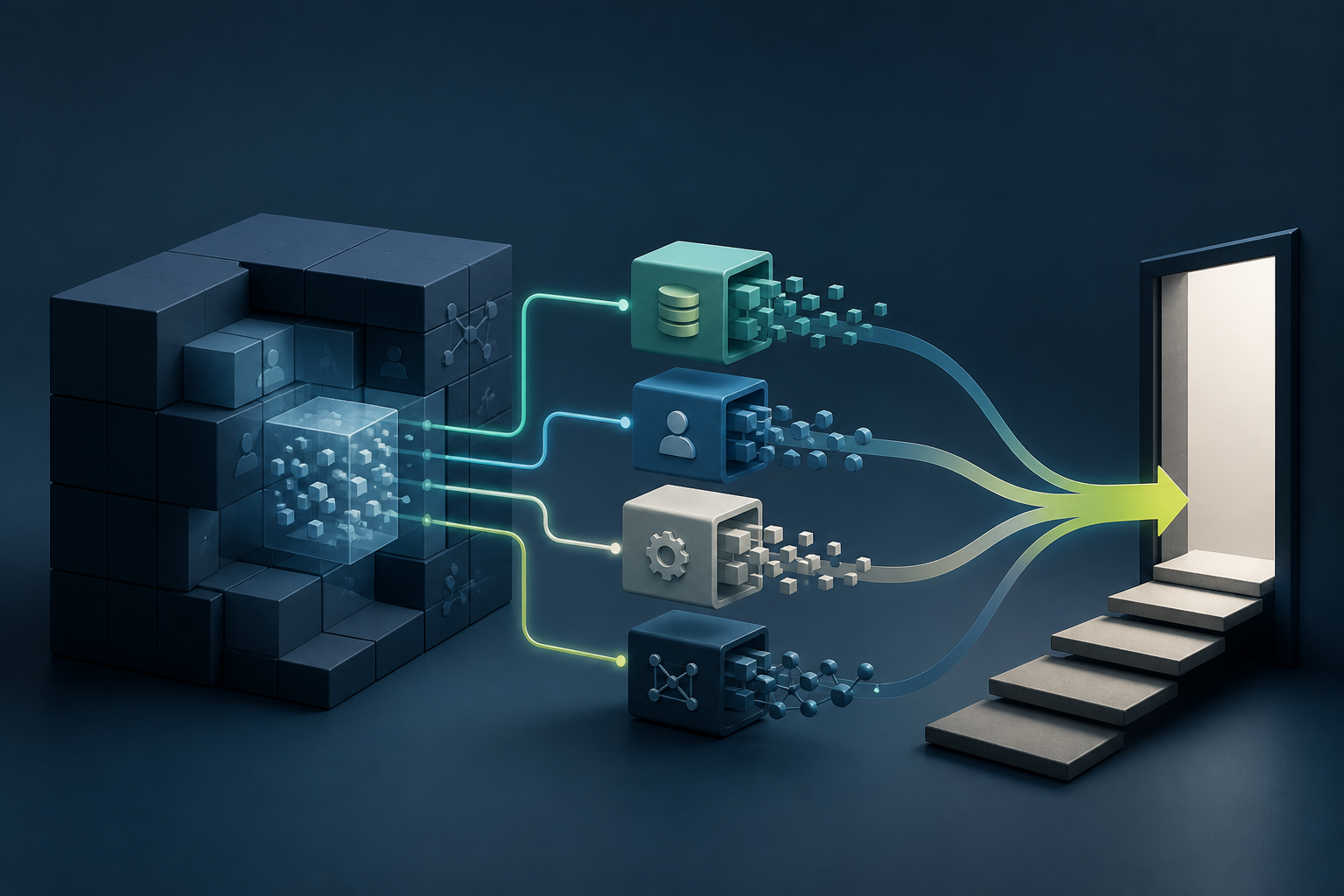
Price interface design, connector subscriptions, middleware, development, testing, monitoring, support and change. A prebuilt connector still needs identity, mapping, error handling, reconciliation and regression review. Include the effort created when either endpoint releases a change.
For data, include profiling, cleansing, ownership decisions, extraction, transformation, rehearsal, reconciliation, archive, retention and disposal. The CRM migration plan shows why moving records is only one part of the cost.
Link estimates to the enterprise integration inventory. Unknown interfaces should remain explicit risks. An estimate that omits unowned dependencies is not a best case; it is incomplete.
Measure the ongoing operating model
Include service ownership, administration, access reviews, configuration, support, monitoring, incident response, continuity exercises, vendor management, reporting, security and privacy assurance. Some work replaces current effort; some is genuinely new. Show both.
Estimate support demand by scenario and confidence. Do not assume automation removes people without evidence. A new interface can reduce repetitive work while increasing specialist administration, exception handling and supplier coordination.
Model environments, test data, release regression and change governance. Enterprise software rarely remains in its launch state. The cost of safe change belongs in ownership even when the supplier delivers frequent platform updates.
Keep benefit evidence separate from cost
Connect each proposed benefit to a baseline, mechanism, owner, measure and realisable decision. Time saved becomes financial value only when capacity is removed, redeployed or prevents another cost. Keep qualitative service, control and resilience outcomes visible without forcing false monetary values.
Use the workplace technology ROI framework to separate adoption, operational outcome and financial consequence. A TCO model explains resource demand; an ROI model additionally tests whether observed value justifies it.
Avoid netting unsupported benefits against well-evidenced costs in the headline. Show gross cost, evidence-backed benefit range and unresolved assumptions so decision makers can understand which side carries more confidence.
Run sensitivity, risk and alternatives
Vary the drivers most likely to change the choice: user growth, implementation delay, data remediation, integration effort, support demand, consumption, renewal price and internal capacity. Show which assumptions move the ranking or affordability threshold.
The US Government Accountability Office’s Cost Estimating and Assessment Guide describes scope, technical baseline, work breakdown, assumptions, data, methods, sensitivity, risk, documentation and updates as parts of a reliable estimate. Its major-program context should be scaled to the decision.
Compare viable alternatives, including narrower scope, phased adoption, current-service improvement and retirement. The purpose is not to make the preferred product win but to clarify the cost and evidence behind different operating choices.
Update actuals and preserve the decision record
After approval, record committed, forecast and actual costs against the same structure. Explain changes in scope, timing and assumption. Do not rewrite the original estimate to make variance disappear. Learning should improve the next forecast and reveal the cause.
Review at design, contract, pilot, cutover, steady operation and renewal gates. Tie supplier invoices and internal effort to the service outcome where possible. A cost dashboard without scope and progress context can mislabel a planned phase shift as failure.
A useful TCO model lets another reviewer reproduce the logic, challenge the drivers and update the result. It supports negotiation and management because it shows where the organisation can reduce, defer, avoid or knowingly accept cost.
Anchor readiness and cost in the same inventory
Microsoft’s application modernisation assessment guidance links inventory, readiness, cost and business planning. It is publisher-owned and not independent proof of a product’s value, but its assessment categories are useful prompts for finding dependencies and internal work missing from a cost model.
Reconcile the TCO inventory with the architecture, supplier proposal and delivery plan. If an environment, interface, data set or support responsibility exists in only one of those sources, investigate before approval. Cost completeness depends on scope completeness.
Keep uncertainty visible through ranges and named discovery actions. When evidence changes, update the driver and record the decision impact. A model becomes decision-grade through traceable revision, not through selecting a single confident number at the start.