ERP change control protects the operating baseline
ERP configuration change control should make each material change understandable, testable, authorised and recoverable. It is not a weekly meeting that approves tickets by volume. The control exists because one setting can alter accounting, inventory, access, workflow, integration and reporting across several teams.
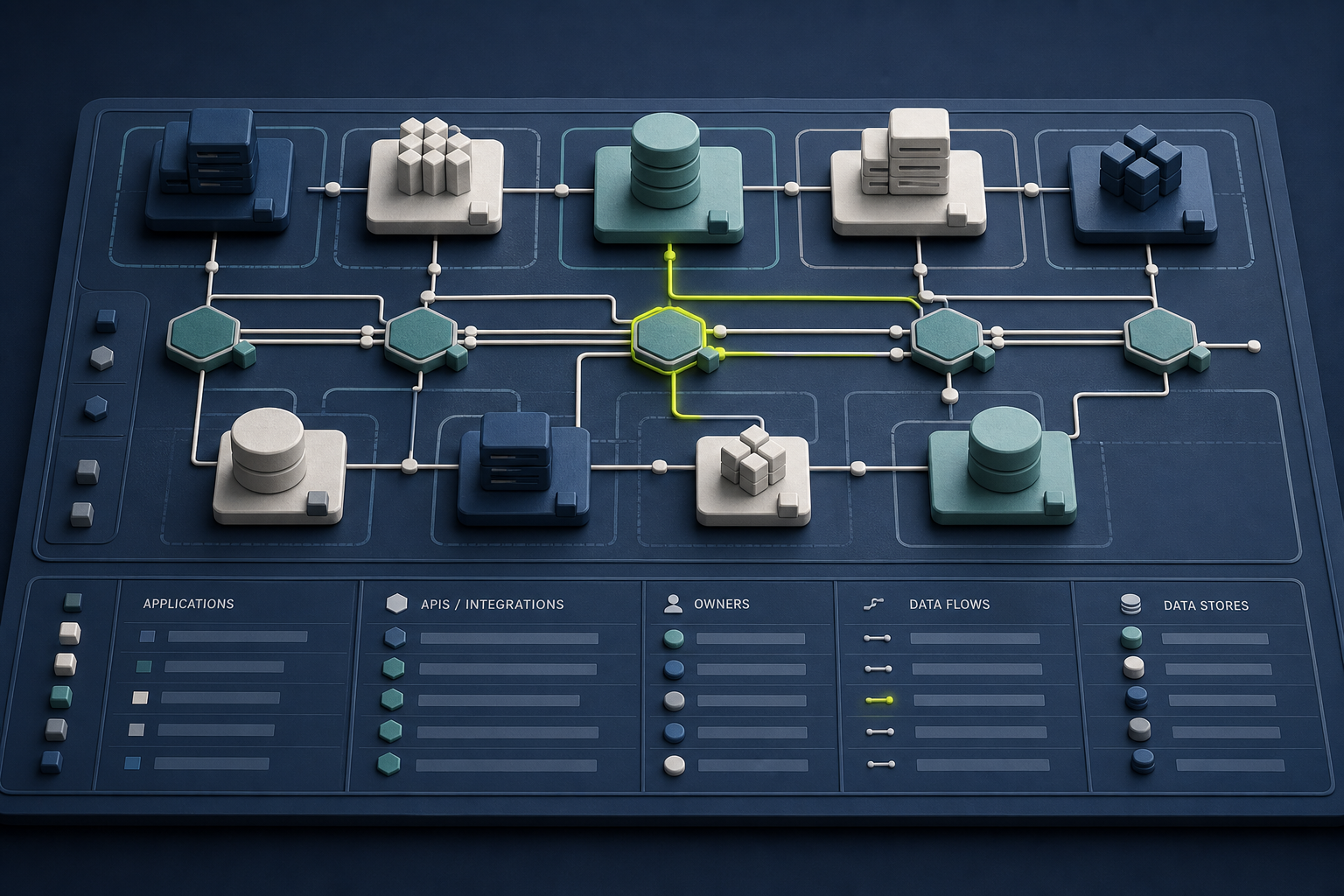
Define the controlled baseline: modules, configuration, extensions, interfaces, roles, reports, master-data rules and environment versions. Record where each element is authoritative. Without a baseline, teams cannot distinguish an intended release from drift or explain which state a test actually covered.
Scale the process by risk. A label change and a posting rule should not need the same evidence, while an urgent security action may use an expedited path with retrospective review. Proportionate control increases attention on consequential changes instead of encouraging work to bypass the process.
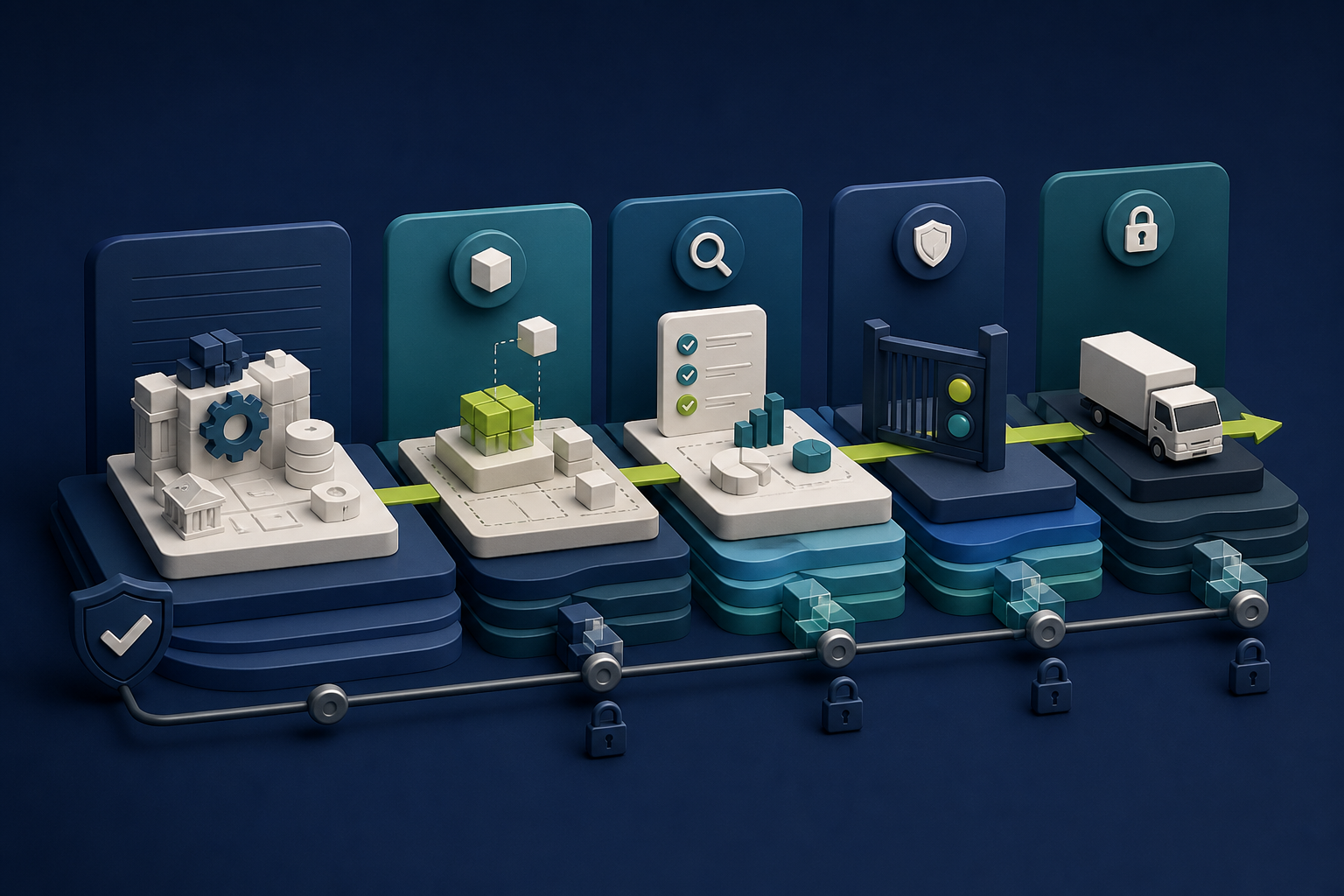
| Stage | Question | Evidence |
|---|---|---|
| Request | What outcome or defect drives change? | Problem and scope |
| Impact | Which journeys, data and controls move? | Dependency assessment |
| Test | What proves fit and regression safety? | Results and exceptions |
| Release | Who approves timing and fallback? | Decision record |
| Review | Did the outcome occur without harm? | Monitoring and reconciliation |
Classify by consequence and reversibility
Assess financial posting, data integrity, access, compliance, customer or supplier journey, interface, service continuity and user impact. Consider scale, timing and reversibility. A small parameter used by every transaction may carry more risk than a larger isolated enhancement.
Create standard, normal, major and emergency routes with clear entry criteria. Standard changes require proven repeatability and a bounded scope, not simply frequency. Review the catalogue after incidents and platform updates.
Identify changes that must be grouped. A workflow update may depend on role, notification, report and integration changes moving together. Separate tickets can help ownership, but the release decision should consider the complete operating change.
Write a request around the business decision
State the problem, affected journey, present behaviour, desired outcome, users, data, timing and excluded scope. Include examples and current evidence. “Change configuration” is an implementation instruction without enough context to evaluate alternatives or acceptance.
Name the business owner, technical owner, tester and approver. Avoid assigning every role to the same implementer for a high-impact change. Separation should add meaningful challenge and evidence, not ceremonial signatures.
Record assumptions and dependencies, including vendor release, master data, integration availability, training and policy decisions. Unresolved assumptions should affect risk and schedule rather than becoming invisible prerequisites.
Trace impact through the complete service
Use the enterprise integration inventory to identify inbound and outbound effects. Review batch schedules, error handling, reports and downstream caches. A configuration may not change an interface schema while changing the meaning of a field.
Inspect roles, segregation, approvals, audit evidence and exception paths. A faster workflow can remove a control or shift responsibility to a person without the required context. Ask control owners to review the observable outcome, not only the setting.
Map data conversion or reprocessing. Determine whether historic transactions retain their original interpretation and whether open items need migration. Preserve the ability to reconcile before and after release.
Keep environments and configuration versions coherent
Document how configuration moves from development through test to production. Avoid rebuilding high-impact settings manually from screenshots. Use supported transport, versioned packages or reproducible records and confirm environment-specific values separately.
NIST SP 800-128 on security-focused configuration management treats security as integral to configuration management and describes managing and monitoring configurations to reduce risk while supporting business functionality. Its federal scope should be adapted to the organisation.
Detect unauthorised or unexplained drift through comparison, audit logs and periodic review. Define which emergency or operational changes can occur directly and how they are captured. A perfect-looking register that differs from production is worse than an honest record with visible gaps.
Test journeys, controls and regression
Build tests from the stated outcome and impact map. Cover a normal journey, meaningful exception, control, integration, report and recovery. Use representative roles and data. A unit-level configuration check does not establish that end-to-end work remains coherent.
Record expected result, actual result, evidence, environment, version and tester. Classify defects and accepted limitations. Re-run affected tests when configuration changes after a failed result rather than carrying forward evidence from an obsolete build.
Include user acceptance where work or meaning changes, but do not ask users to certify technical safety they cannot observe. Combine business, control and technical evidence in the release pack so each reviewer approves the area they understand.
Plan release, fallback and communication
Choose timing based on business cycles, batch activity, support coverage and dependency availability. Define freeze, backup, deployment, smoke test, monitoring, reconciliation and go or no-go authority. A calendar slot is not a release plan.
Create a fallback that matches the change. Configuration rollback may not reverse transactions created under the new rule. State whether the response is restore, compensating entry, feature disablement, data repair or forward fix and who can decide.
Tell affected users what changes in their task, when, what they should verify and where to report difficulty. Avoid generic release notes. Support teams need known symptoms, routing and safe interim guidance before the first request arrives.
Review outcomes and emergency changes
After release, compare the operating measure, errors, support, reconciliation and control evidence with the expectation. Keep the review window appropriate to transaction frequency. A month-end change may not be validated by a next-day smoke test.
Emergency changes should record reason, authority, implementation, validation, impact and follow-up. Review whether the emergency path was justified and whether a permanent fix, control or test is needed. Speed does not remove accountability.
Feed repeat failures into standards, automated tests and the ERP implementation pathway. If the same configuration area repeatedly causes incidents, the problem may be ownership, design or architecture rather than individual execution.
Measure the quality of the control
Useful measures include unauthorised drift, failed changes, emergency use, rollback or repair, lead time by risk, recurring defect and evidence completeness. Interpret them together. Fewer recorded changes can mean stability or avoidance.
Sample completed changes and compare request, production state, testing and observed outcome. Ask whether another responsible person can reconstruct why the change was safe and what happened. This tests the control more directly than counting approvals.
Good change control allows the ERP service to evolve without making its current state mysterious. It gives teams enough evidence to move confidently, enough challenge to catch material risk and a reliable way to learn when a change does not behave as expected.
Review software configuration as an operating discipline
The GOV.UK Service Manual includes guidance for managing software configuration. Its service context and tooling choices will not fit every ERP, but the emphasis on separating configuration from code and controlling environment differences provides useful challenge for deployment design.
Compare ERP transport records with supplier platform updates and local administrator activity. Some changes arrive through vendor release, feature flags or master-data maintenance rather than the normal package path. The control model should capture consequence and evidence across all of them.
Run a quarterly sample from request to production and from production back to an approved record. The forward sample tests delivery discipline; the reverse sample tests whether the organisation can explain its real baseline. Unexplained drift should receive an owner and risk-based response.